EU industry subsidies: temporary rescue, or a new norm?
An article from the Financial Times reveals a fundamental shift in European industrial policy. What has been seen for decades as a necessary evil is turning into a permanent tool — and not everyone is happy about it.
EU member states in 2024 spent €168.23 billion on state aid — just under 1 % of the bloc’s GDP. The total volume of subsidies grew by roughly half between 2014 and 2019, i.e., before Covid. After the pandemic and the energy crisis it did decline, but it has not yet returned to pre‑crisis levels.
Just for energy subsidies in the period 2021–2023 about €540 billion was spent. Of that, €158 billion went to Germany itself, whose industry was heavily dependent on Russian gas. Overall, Germany accounts for almost a quarter of all state support in the EU.
In some countries firms can obtain subsidies covering 40–60 % of project costs, while others (Sweden) provide significantly less — risking that investments flow to countries with the strongest budgets rather than the best conditions.
Just in Germany this month the Industriestrompreis came into force — a temporary price‑relief programme for energy‑intensive firms. Smaller states such as the Netherlands, Sweden or the Nordic countries fear that such measures fracture the single market from within.
Proponents of higher subsidies point to the US Inflation Reduction Act of 2022 with its generous tax credits and to massive Chinese subsidies. French President Macron repeatedly argues that Europe is the only place that does not protect its domestic players. Mario Draghi calls for hundreds of billions of euros in investment, largely public, so that Europe can face Chinese competition.
Critics warn that the EU’s comparative advantage is the size and openness of its market. If we undermine it with fragmented subsidies, we will give up the only thing the US and China cannot replicate.
The FT asks whether we are moving from “less and better” to a permanent, state‑driven industrial policy? And if so — who will foot the bill? Large economies have levers. Small states are wary. And the single market — the EU’s main weapon in global competition — is under pressure.
Related articles
ETS under pressure: Austria and Spain get the green light for compensations to energy‑intensive companies
EU allocated 400 million euros for the decarbonisation of industrial heat
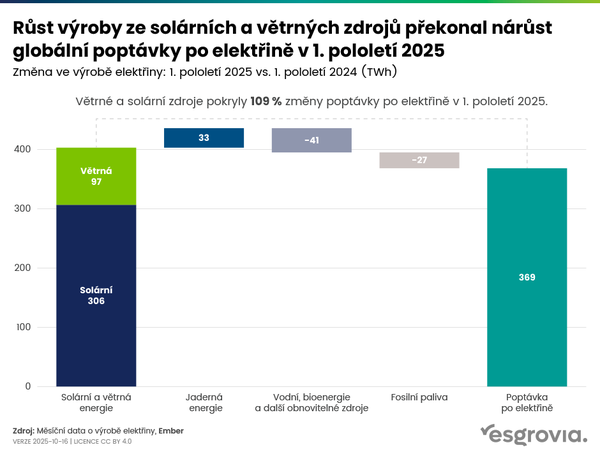
Renewable sources overtook coal as the world’s leading source of electricity for the first time