The Commission approved the final revised ESRS. 60% fewer mandatory data points — and 90% fewer companies within the scope of CSRD.
The European Commission on July 3 adopted the final revised European sustainability reporting standards (ESRS) and a voluntary standard for smaller companies. It is apparently the last major step simplifying the Omnibus I package.
What specifically is changing:
- the number of mandatory data points drops by 61%, the total number by more than 70% (all voluntary disclosures eliminated)
- expected reduction of reporting costs by more than 30% per company
- companies below the threshold of €450 million turnover and 1,000 employees fall out of mandatory reporting — the scope of CSRD has narrowed by roughly 90%
- the standards are shorter, clearer and add new flexibilities
Four points worth noting:
1) Alignment with ISSB. Companies can now choose how to define the boundaries of their GHG inventory — by financial or operational control approach. Greater flexibility, but also more room for each to draw the boundaries.
2) Value chain cap. Companies under CSRD must not demand more data from the supply chain than is covered by the voluntary standard. Protection of small suppliers from the transfer of reporting burden.
3) 1.5 °C transparency. Anyone reporting a transition plan with targets incompatible with 1.5 °C must now explicitly acknowledge it.
4) Relief for asset managers. For investments managed on behalf of clients (fiduciary duty), duplicate reporting is eliminated.
Delegated acts are headed to the European Parliament and the EU Council for scrutiny. They will enter into force unless either body raises an objection.
The aim of the changes is less bureaucracy while preserving the quality of disclosures. The question is whether companies that have already invested in the first CSRD cycle now find the “playing field” shifted too much.
Related articles
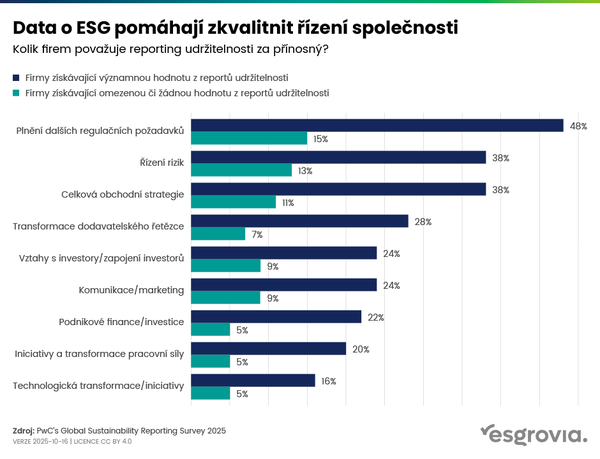
Data on ESG help improve company management
90 % of companies outside CSRD plan to continue sustainable reporting.
Switzerland joins the EU: new sustainability law