EU Parliament tightens SFDR: three ESG categories, but with stricter rules

The European Parliament has published a proposal to revise the SFDR (Sustainable Finance Disclosure Regulation), which could fundamentally rewrite the rules on how asset managers market ESG funds in the EU. The proposal supports the Commission's move towards three categories – but with significantly stricter safeguards against greenwashing:
1) Sustainable – products contributing to sustainable goals (climate, environment, social), investments in companies already meeting high standards
2) Transition – products financing the transition of companies to sustainability (CTB/PAB benchmarks, science‑based targets, engagement)
3) ESG Basics – products integrating ESG beyond mere risk management, but without a specific transition or sustainability goal
Each category has a 70% portfolio threshold and mandatory exclusion of certain sectors.
What the Parliament wants to tighten:
- mandatory PAI indicators (Principal Adverse Impact) for all three labelled categories – not just optional
- disclaimer for unlabelled funds using "sustainability" language – products without an EU category would have to clearly inform retail investors that they do not meet EU standards for sustainable financial products
- ESG Basics: stricter screening – exclusion of at least 20% of the lowest‑rated securities before one can claim "ESG outperformance"
- better comparability across EU financial products for retail investors
Why is it changing at all?
The current Article 8 / Article 9 system has effectively started being used as a labeling system, even though it was designed as a disclosure framework. Investors assumed that Article 9 funds are "fully sustainable" and Article 8 funds "strongly integrate ESG" – but the reality was much more complex, leading to greenwashing risks.
Moreover, the disclosure templates were too long and complex – retail investors could not compare them. The Commission estimates that the new rules will reduce annual compliance costs by 25%.
Key changes in SFDR 2.0 compared to the original state:
- definition of "sustainable investment" removed + DNSH principle
- entity‑level PAI disclosures removed (only product‑level)
- shortened disclosure templates (max 2 pages!)
- "Sustainability" language in names and marketing only for labeled products
What to take away from this?
For asset managers:
This is a signal that the era of "self‑classified" Article 8/9 funds is ending. If you want to continue marketing a fund with "sustainability" in its name, you must choose one of three categories and meet its criteria. Existing Article 8/9 products face a strategic decision: upgrade to a new category, or redesign without ESG claims.
For investors:
Better comparability and clearer labels – but the transition period will be chaotic. Between November 2025 (proposal) and the end of 2028 (application) many funds will have to be rebranded.
For retail investors:
Finally you will get 2‑page disclosures instead of 30‑page PDFs that only compliance departments understand.
The SFDR amendment is another article in the EU Simplification Wave series, similar to the CSRD omnibus or the simplification of the EUDR. The goal is to preserve the content and reduce bureaucracy, yet the question remains whether the Parliament will succeed in pushing for higher ambition (mandatory PAI, 20 % screening), or whether the final version will end up softer due to pressure from the financial sector.
Related articles
SEC sends the climate disclosure rule to the ground

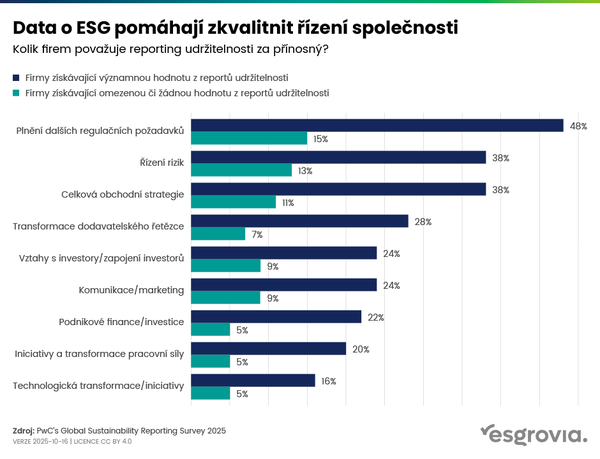
Data on ESG help improve company management