The Danish central bank calculated the investment emissions of the financial sector in 2025
Denmark's National Bank published fresh climate statistical data for the Danish financial sector for the year 2025. It is one of the most thorough and most transparent national climate reports from a central bank in the EU. It also provides an interesting view of where regulators' focus may head in the future.
Key figures for 2025:
- €295 bn investments in listed non-financial companies
- 11.3 million tonnes CO₂eq of so‑called financed emissions
- investments in transport and the materials sector are the main drivers of growth
In 2025, investment emissions rose slightly, but they are declining in the long term due to divestment from carbon‑intensive companies and lower emissions from invested firms.
A key point is the high concentration of emissions – roughly 6% of investments account for half of all financed emissions.
This means that even small shifts in the portfolio can have a dramatic impact on the carbon footprint. If investors demand active decarbonisation strategies for their investments, it is enough to focus on the top 6% of the portfolio and selected sectors, which can directly affect company valuations.
The central bank's calculations do not include bank loans or unlisted shares and bonds, however the central bank announces that coverage will be gradually expanded.
Denmark and its state institutions are among the biggest advocates of sustainability and transparency in the world. Whatever we think about sustainability and its intertwining with investing, the Danish central bank signals a trend that other central banks and potentially investors can adopt, which may be reflected in the valuations and liquidity of individual stocks and bonds.
The Danish case also shows that emissions are highly concentrated in a few sectors and potentially in selected equity securities. Approximately 6% of investments account for 50% of emissions. For regulators this means that targeting top emitters is more effective than blanket rules.
Czech funds and banks are only just beginning with similar reporting (CSRD, SFDR) and the Czech central bank does not yet publish any comparable aggregated climate statistics. The Danish methodology could therefore be a useful benchmark worth monitoring to see where we can move in a few years.
Related articles
India launched its own central portal for trading carbon credits.

EU Parliament tightens SFDR: three ESG categories, but with stricter rules

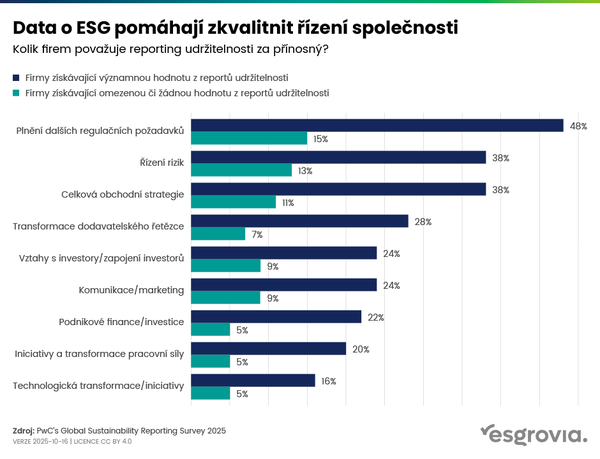
Data on ESG help improve company management