Germany launches the third round of a €5 billion auction for decarbonising its industry – inspiration for the Czech Republic?
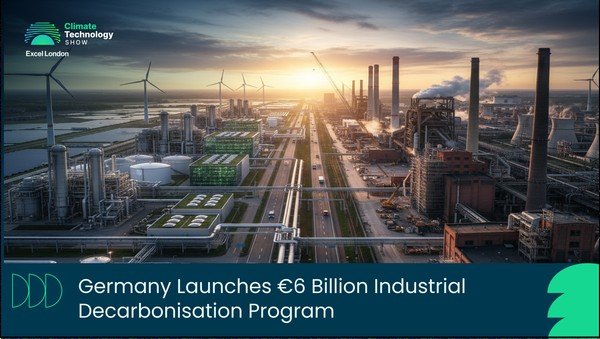
The German Ministry of Economy and Energy announced on 5 May 2026 the third round of the Carbon Contracts for Difference (CCfD) programme, in which it will allocate up to €5 billion to energy‑intensive industrial companies for decarbonisation.
The programme has been running since 2023, but based on feedback from previous rounds it underwent a significant recalibration – it is an example of how regulation should learn from reality.
Compared with previous rounds, the emission requirements are being relaxed:
- emission reduction: 50 % within 4 years (previously 60 % within 3 years)
- final target: 85 % (previously 90 %)
Broader technological scope:
- newly, CCS/CCU is supported where process emissions dominate or emissions are difficult to eliminate otherwise (cement, lime, steel)
- newly eligible projects for industrial steam focused solely on heat production
- the programme moves towards technological neutrality – the state does not dictate the technology, selection is based on the cost per avoided tonne of CO₂
How CCfD works:
- companies submit a bid based on the desired subsidy per avoided tonne of CO₂ and the state pays the difference between the costs of clean and conventional production
- two‑way mechanism: if clean production becomes cheaper than conventional (e.g., due to rising ETS prices), the company returns the money
- contract duration: 15 years
- coverage: chemicals, glass, steel, cement, paper, glass, non‑ferrous metals
This is the third round of a total budget of up to €50 billion for 15 years, which the Commission approved already in 2023. The previous rounds took place in 2023 and 2024.
What can be taken away from this?
1. Example of adaptive policy – the ministry, based on market feedback, softened the targets and expanded the scope. This is rare for industrial subsidies – usually we see a rigid bureaucratic approach.
2. CCS is getting a place, but only where it makes sense. Opening CCfD to CCS is an important signal: Germany (historically very cautious about CCS) acknowledges that for process emissions (cement, lime) there is simply no alternative. This is a substantive shift, not an ideological declaration.
3. The two-way mechanism remains. If the ETS allowance price rises faster than the costs of clean technologies fall (and this scenario is realistic), the state will gradually return the subsidy.
For the Czech Republic this could be an interesting inspiration. The Czech Republic could use a similar mechanism through the Modernisation Fund for its own heavy industries (Třinec Ironworks, Lovochemie, Cement Mokrá, glass industry). Auction model = the highest climate effect per euro.
If your industry is subject to the ETS and you are considering decarbonisation investments, check out klimaschutzvertraege.info – there you will find details on the current round. Opening up to CCS and steam projects is a significant change compared to the past.
Related articles
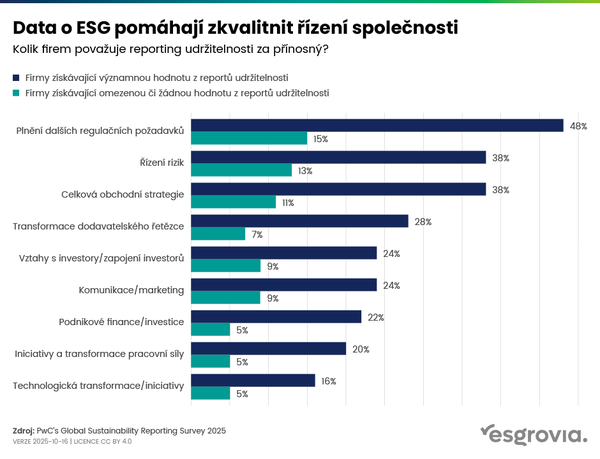
Data on ESG help improve company management