California narrowed Scope 3 from 15 categories to 5.

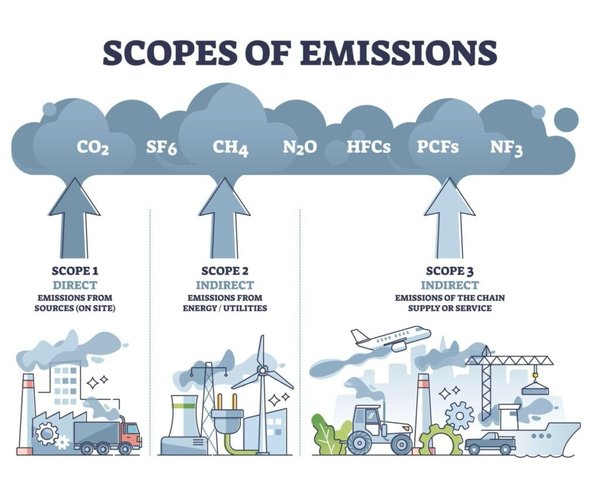
California's CARB presented a proposal on how to roll out mandatory reporting of Scope 3 emissions under SB 253. Instead of all 15 GHG Protocol categories, reporting will start with only five — after feedback from companies regarding costs and data availability.
What is changing:
Five categories to start. Purchased Goods and Services, Fuel and Energy Related Activities, Waste Generated During Operations, Business Travel and Employee Commuting. CARB considered three approaches — all at once, a phased rollout by sectors, or by categories — and chose the latter, emphasizing areas where established data sources and methodologies already exist.
The key category remained included. Purchased Goods and Services is usually the largest single item of the Scope 3 footprint. Therefore, the narrowing does not reduce the emission scope as the number of categories might suggest.
The remaining ten are currently voluntary. Use of sold products, investments, downstream leased assets and others remain outside the mandatory regime, with no timeline specified. Companies can report them voluntarily — which will create a comparative gap between those reporting the minimum and those going further.
Insurers finally yes. The original exemption was dropped. CARB concluded that parallel reporting to the California Department of Insurance is insufficient because it does not include Scope 3 or verification. Starting in 2027, insurers will fall under SB 253 — either with a single combined report or an amendment to the existing CDI filing.
Limited assurance for Scope 1 and 2 from 2027. Verification according to one of five recognized standards; which one is used depends on when the engagement starts relative to the cut‑off date in mid‑December 2026. Scope 3 does not yet have mandatory verification.
CARB plans additional hearings with stakeholders in August and September before finalization.
Interesting formula: ease the scope where the data have not yet matured, but tighten it where they have already matured — and for insurers reject a milder regime as a substitute. Simplification of form, not ambition.
Related articles
Decarbonization of supply chains: start asking “how will we profit from it?”

GHG Protocol has a new boss – and the biggest battles in the history of emissions accounting await him
82% of companies are maintaining or accelerating climate targets