Switzerland joins the EU: new sustainability law

The Swiss government has published a draft of a new Federal Act on Sustainable Corporate Governance, which will significantly align Swiss rules for non‑financial reporting and due diligence with the EU directives CSRD and CSDDD.
Large Swiss companies will have to report in accordance with the European Sustainability Reporting Standards (ESRS) or an equivalent standard.
The new thresholds correspond to EU Omnibus I, i.e.:
Reporting: companies with 1,000+ employees and a turnover of 450 million CHF (~488 million €) – will affect roughly 100 companies (compared to today’s ~200 falling under the existing rules for firms with over 500 employees)
Due diligence: companies with 5,000+ employees and a turnover of 1.5 billion CHF (~1.6 billion €) – will affect about 30 companies
The new due diligence obligations include:
- assessment of the impacts of own activities as well as those of business partners in the supply chain on human rights and the environment
- implementation of a strategy and a code of ethics linked to corporate risk management
- identification, prevention and remediation of actual and potential impacts
- mechanisms for complaints and reporting
- regular evaluation of the effectiveness of measures
The proposal comes shortly after the completion of the EU "Omnibus I" process, which on the contrary dramatically narrowed the scope of companies falling under CSRD and CSDDD (from 250 employees to 1,000 for CSRD; CSDDD only for the largest players with 5,000+ employees). Switzerland therefore explicitly copies the new, milder European thresholds – thereby ensuring that Swiss companies will not be at a competitive disadvantage compared to their European counterparts, while also maintaining compatibility with the Europe‑wide standard.
Even though the EU, under business pressure, "omnibused" to milder rules, the direction itself is clear – ESRS are de facto becoming a regional standard not only for the EU but also for Switzerland.
ESG reporting is becoming professionalized, focusing on the biggest players, and is turning into a fundamental operational requirement, not voluntary marketing.
Source:
Related articles
The Commission approved the final revised ESRS. 60% fewer mandatory data points — and 90% fewer companies within the scope of CSRD.

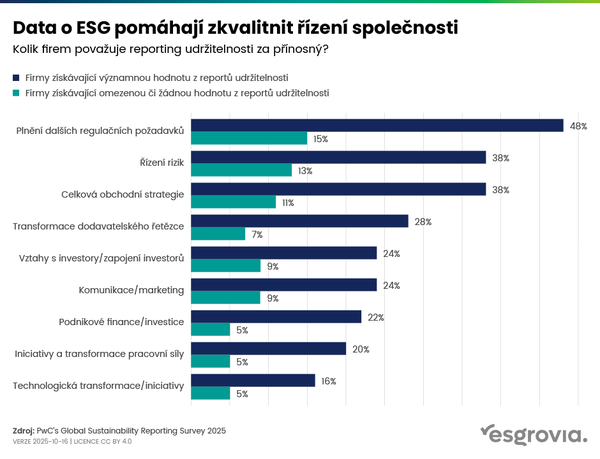
Data on ESG help improve company management