The European Association of Fastener Material Distributors (EFDA) warns that CBAM could increase the price of screws and nuts by 30–50%.

Importers, according to EFDA, cannot use actual emission data and must pay based on the Commission's unrealistic default values.
Criticism of the CBAM program generally focuses on the fact that:
1) The default emission factors are deliberately high. The defaults are set above real averages to motivate companies to obtain actual data. Additionally, a markup is added — 10% in 2026, 20% in 2027, 30% from 2028.
2) They do not reflect reality. Cleaner producers pay the same as the dirtiest ones if they lack verified data. For example, American steel values are significantly higher than the official estimates of the US government.
3) Real data cannot be obtained in time. Verification requires an on-site audit of every facility in the supply chain. Emissions for 2026 can only be calculated at the end of the year, and must be submitted by September 2027 — and there are not enough accredited auditors worldwide.
4) Huge financial impact. For some steel products, CBAM costs with defaults exceed €200 per tonne. For fasteners, a price increase of 30–50% is being discussed.
5) Unequal conditions. In some cases, CBAM includes emissions that domestic producers in the EU ETS do not have to pay for — importers thus paradoxically pay more.
The result could therefore be that a motivational tool becomes, in effect, a trade barrier that also affects clean producers who simply did not manage to secure verified data.
Related articles
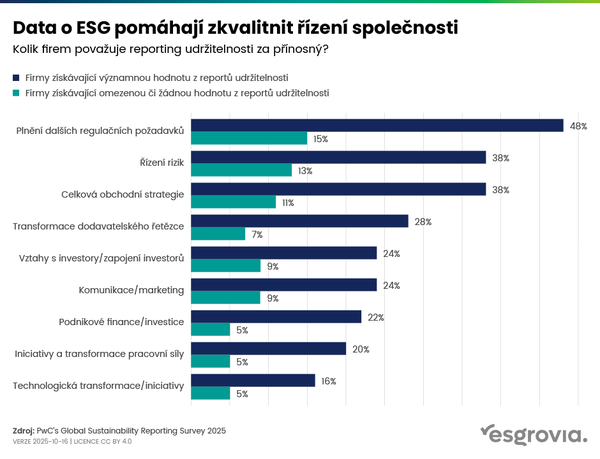
Data on ESG help improve company management