Korea introduces mandatory ESG reporting

The Korean Financial Services Commission (FSC) released the final roadmap for mandatory ESG reporting. Compared to the original proposal, it significantly expanded the scope of companies it will cover. The decision came at the request of institutional investors who wanted more data usable for investment decisions.
That's an interesting contrast: the EU, through the Omnibus, is reducing the number of companies under CSRD, and the USA is abolishing climate reporting altogether. Korea, on the other hand, is moving in the opposite direction.
What the Korean roadmap looks like:
- lower threshold, more companies. The obligation starts in 2028 for firms with assets over 10 billion KRW (approximately $6.7 billion USD) – originally it was to be up to 30 billion KRW. A year later the threshold will be reduced to 5 billion KRW.
- a sharp increase. In 2028, more than 290 companies will start reporting, and a year later already over 3,100. Authorities are considering another threshold reduction to 2 billion KRW from 2030.
- standards based on the ISSB. Korean KSSB standards (No. 1 and No. 2) correspond to IFRS S1 and S2.
Transitional reliefs to help companies manage:
Scope 3 is postponed by three years after the start of reporting; smaller companies that are not high emitters will be exempt from Scope 3.
The first three years without sanctions or damage compensation for report content — except for intentional greenwashing, which authorities promise a hard line.
Mandatory third‑party verification only from 2030. Until then, voluntary reporting via Korea Exchange (KRX).
The government is also preparing support: a platform for climate risks, sectoral guides for Scope 3 for 15 key export industries, and ESG consulting programmes.
Related articles
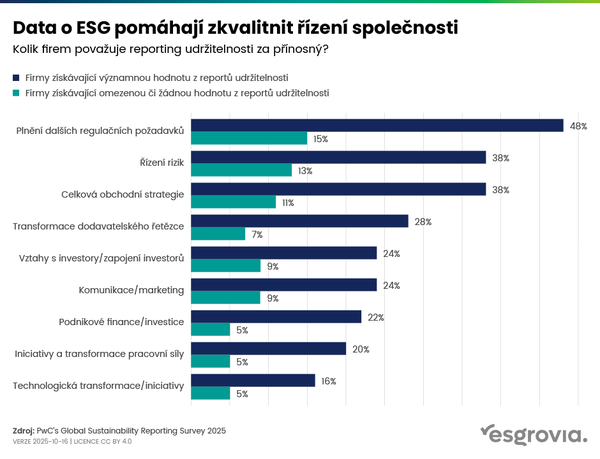
Data on ESG help improve company management