The British Climate Change Committee (CCC) released an analysis in which it says that the costs of achieving net-zero are lower n...
Achieving net-zero requires approximately £4 billion of additional spending per year until 2050. For comparison — the latest energy crisis after Russia's invasion of Ukraine cost the UK £183 billion over four years.
The CCC modeled a scenario in which a price shock comparable to that of 2022 would occur in 2040. Without decarbonisation, average household energy bills would rise by 59 %. On the path to net-zero they would increase by only 4 %.
The benefits of transitioning to net-zero outweigh the costs by 2.2 to 4.1 times for every pound invested.
The biggest economic benefit is avoiding climate damages — estimated at £40 to £130 billion in 2050. Energy losses in a net-zero system would fall to £30 billion per year compared with the current roughly £60 billion.
The report comes in the context of rising oil and gas prices after the conflict with Iran, where some politicians are calling for a slowdown of decarbonisation. The CCC argues the opposite — dependence on fossil fuels is the main source of economic vulnerability.
Related articles
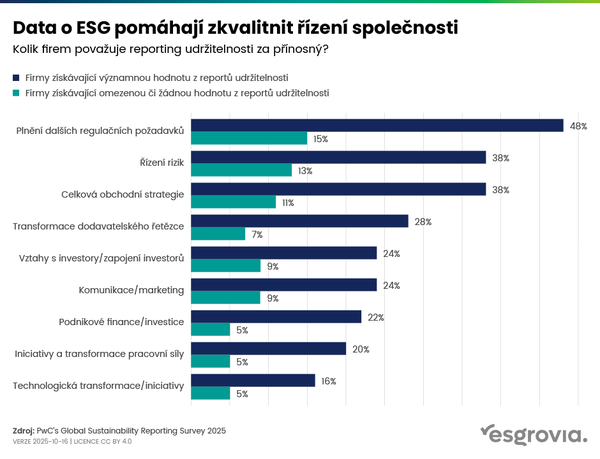
Data on ESG help improve company management