New IndexBox report shows that the global market for recycled plastics will grow at a rate of 7.2% per year until 2035. What a t...
1) Regulation – mandatory minimum recycled content (EU Single-Use Plastics Directive, US state laws)
2) Corporate commitments – EPR schemes and ESG targets of major brands (Coca-Cola, Unilever, P&G...)
3) Economics – volatility of virgin plastic prices tied to oil improves the competitiveness of recyclates
4) Technology – advances in sorting, washing and chemical recycling increase output quality
The packaging industry accounts for the largest share of demand (45%), followed by construction (20%), the automotive industry (12%) and textiles (10%).
Regionally, Asia-Pacific dominates (40%), Europe is the most regulatory-advanced market (25%), North America (22%) is growing but faces fragmented legislation.
A shortage of high-quality feedstock is seen as the main risk for most companies. Contaminated waste streams and insufficient collection infrastructure remain another potential key growth brake.
Conclusion:
Recycled plastics are moving from an ecological niche to a mainstream industrial raw material, and regulation is creating additional demand. The question is not whether, but how quickly the market will adapt.
Related articles
The global recycled plastics market will grow at a rate of 7.2% per year until 2035.
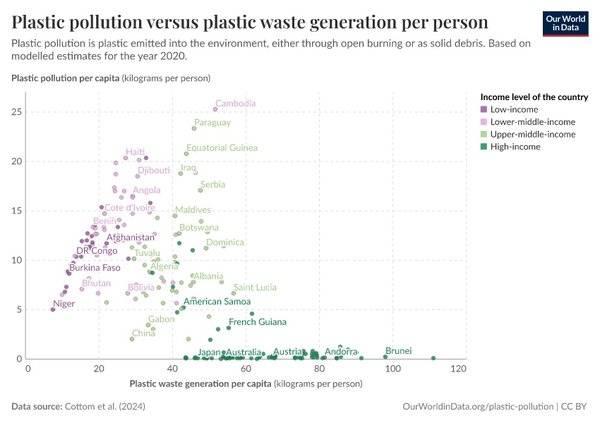
98% of plastic pollution is solvable. And quite simply. An analysis by Our World in Data shows surprisingly simple...
Henkel presented new targets for 2030 for climate, circularity and the supply chain